
Weather for mushrooms: at what temperature and humidity do mushrooms grow
Updated: September 1, 2025 · Reading time: 12 min
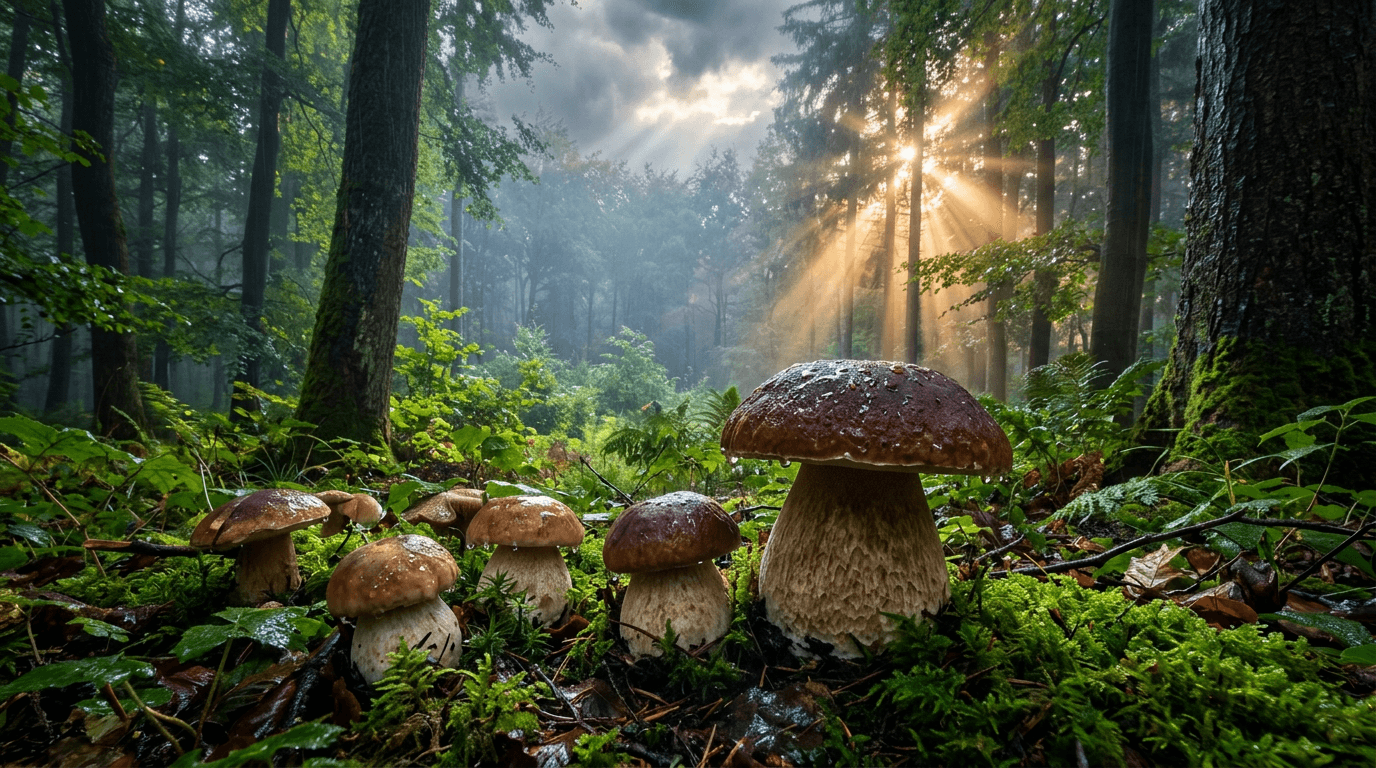
Every experienced forager knows: you can walk ten kilometers through the forest and come back with an empty basket, or you can drop by a familiar spruce grove for half an hour — and fill your basket to the brim. The difference isn’t luck or secret spots. The difference is the weather for mushrooms. It’s the weather conditions that determine whether the mycelium wakes up, whether it begins forming fruiting bodies, and whether it has enough moisture to grow them to a size worth putting in the basket.
According to a paper published in the journal Mycological Research, the fruiting of basidiomycetes (to which most edible mushrooms belong) is triggered by a combination of three key factors: soil temperature, substrate moisture, and the swing between daytime and nighttime temperatures. None of these factors “switches on” a flush of mushrooms on its own — only their combination does.
In this article we’ll break down at what temperature mushrooms grow, what humidity different species need, how much rain has to fall, and exactly when to expect a mushroom flush. All the data is backed by scientific sources and proven in the field.
Air and soil temperature
When foragers say “the mushrooms are up,” there is very specific physics behind it: the soil temperature at a depth of 5–10 cm holds steadily within a certain range. As Professor L.G. Perevedentseva notes in her work “Mycology: Fungi and Fungus-like Organisms,” the mycelium of most forest mushrooms begins active growth at a soil temperature of +8°C, while the optimal temperature for forming fruiting bodies is +10 to +20°C.
But each species has its own “favorite” range. The porcini (king bolete) prefers warm but not hot weather — +15…+20°C air temperature. Once the thermometer climbs above +25°C, the porcini “goes dormant”: the mycelium is too hot and dry. Chanterelles, on the contrary, start earlier and tolerate cool weather better — they are comfortable already at +10…+16°C. And autumn honey mushrooms actually love the cold: mass fruiting begins when nighttime temperatures drop to +5…+10°C.
It’s not only the absolute reading that matters, but also the swing between daytime and nighttime temperature. According to research by mycologists at Moscow State University, a difference of 8–12 degrees between day and night is one of the most powerful triggers of fruiting. This explains why mushrooms appear en masse in late August and early September, when the days are still warm but the nights are already crisp with autumn.
| Mushroom species | Optimal air t° | Min. soil t° | Season |
|---|---|---|---|
| Porcini (king bolete) | +15…+20°C | +10°C | July — September |
| Birch bolete | +14…+20°C | +9°C | June — October |
| Aspen bolete | +14…+22°C | +9°C | June — October |
| Chanterelles | +10…+16°C | +8°C | June — October |
| Slippery jacks | +12…+18°C | +8°C | June — October |
| Autumn honey mushrooms | +8…+14°C | +5°C | September — November |
| Milk caps | +10…+16°C | +8°C | July — October |
| Saffron milk caps | +10…+18°C | +7°C | August — October |
| Russulas | +12…+22°C | +8°C | June — October |
* Data compiled from materials of the Department of Mycology and Algology of the Faculty of Biology at Moscow State University and the reference guide “Mushrooms of Belarus” (Gapienko O.S., 2012).
Humidity — the forager’s main ally
If temperature is the “switch” for the mushroom season, then humidity for mushrooms is the fuel. A mushroom’s fruiting body is 85–95% water. Without enough moisture, the mycelium simply can’t “push” a mushroom up to the surface, even if the temperature is perfect.
The optimal relative air humidity for most edible mushrooms is 70–90%. At humidity below 60%, even mushrooms that have already started growing stop, dry out, and become wormy faster than usual. According to research published in the journal Fungal Ecology, a drop in substrate moisture below 40% completely blocks the formation of primordia (the beginnings of fruiting bodies).
Soil moisture is no less important than air humidity. The ideal state is when the forest litter is moist to the touch, but water isn’t pooling in puddles. Experienced foragers check it simply: they grab a handful of moss or needles and squeeze — if droplets appear between their fingers, there’s enough moisture. If the litter crumbles like dust, it’s pointless to expect mushrooms, even if it rained a week ago.
Dew and fog deserve a special mention. Morning fog is a sure sign that humidity in the forest is at the right level. It’s no wonder the old saying goes: “Fog over the forest — mushrooms in place.” Warm nights with heavy dew keep the moisture of the near-ground air layer up even during dry spells.
Rainfall: how much rain mushrooms need
A “mushroom rain” is more than a pretty phrase. The type of rainfall directly affects mushroom growing conditions. The ideal scenario is warm, moderate rain, 10–20 mm per day, lasting 2–3 days, followed by 5–7 days of warm weather without extreme heat. It’s exactly this pattern that triggers mass fruiting.
A short downpour of 30–50 mm in an hour is almost useless for mushrooms. Such rain doesn’t have time to soak in: the water runs off the surface into streams, and the topsoil layer, where the mycelium lives, stays dry within a day. Prolonged drizzling rains are far more useful — they soak the forest litter evenly and for a long time.
The key rule: the main flush of mushrooms appears 7–14 days after heavy rainfall. The mycelium needs this time to “drink up” the moisture, form primordia, and grow them to a noticeable size. The fastest to react are russulas and slippery jacks (5–7 days); the slowest to get going are porcini and milk caps (10–14 days).
As Professor L.G. Perevedentseva notes, for sustained fruiting the total rainfall over the preceding 2–3 weeks needs to reach at least 30–50 mm. If less than 20 mm fell during that period, you shouldn’t count on a mass mushroom flush, though a few specimens may appear in hollows and along streams.
Wind and atmospheric pressure
Temperature, humidity, and rainfall are the three pillars of mushroom weather. But there are also secondary factors that experienced foragers take into account. Strong wind (more than 7–8 m/s) dries out the topsoil and the forest litter, lowering the humidity in the mycelium zone. After several windy days, even a well-moistened forest can “dry out” enough that mushrooms stop growing.
Atmospheric pressure is a debatable factor, but many foragers swear that mushrooms grow better at stable or slightly low pressure (740–755 mmHg). There isn’t much scientific proof of this, but there is an indirect link: low pressure is usually accompanied by cloud cover, high humidity, and rainfall — and those are already direct conditions for mushroom growth.
Sharp pressure swings (more than 5 mmHg per day) usually coincide with a change of weather fronts. When a warm front with rain is followed by a cold front with clearing skies, it often “locks up” mushroom growth for several days. That’s why the ideal window for foraging is stable, warm weather a week or a week and a half after heavy rains, without sharp barometric fluctuations.
Weather conditions for different mushroom species
Porcini (king bolete)
The king of foraging is demanding about the weather. The optimal weather for porcini is an air temperature of +15…+20°C, humidity of 75–85%, and no strong wind. The porcini likes neither heat nor cold: at +25°C and above, growth slows; at +8°C and below, it stops. Porcini prefers well-warmed soil, so the first “flushes” appear no earlier than mid-June, with the peak in August and early September. After a heavy, warm rain, expect porcini in 10–14 days. Look for them in pine forests with mossy litter, in spruce groves, and in mixed forests with birch.
Honey mushrooms
Weather for honey mushrooms is a story of its own. The autumn honey mushroom (Armillaria mellea) is one of the few mushrooms that needs cold to get started. Mass fruiting begins when the average daily temperature drops below +12…+14°C, with nights around +5…+8°C. The first frosts don’t scare honey mushrooms — they keep growing even after brief sub-zero spells. Humidity is critical for them: if the woody substrate (stumps, trunks) dries out, growth quickly stops. But one good rain, and within 5–7 days whole “families” appear on familiar stumps.
Chanterelles
Weather for chanterelles is the most “easygoing.” Chanterelles start growing earlier than many other mushrooms (already in June) and finish later (through October). The optimal temperature is +10…+16°C, but they tolerate warmer weather too if humidity is sufficient. The chanterelle is almost never wormy thanks to its quinomannose content, so even during a dry spell you can find usable specimens. The main requirement is steady moisture in the forest litter. Chanterelles grow in waves: after each significant rain, a new “flush” appears within 5–10 days.
Slippery jacks
Slippery jacks are among the mushrooms that respond fastest to rain. The optimal temperature is +12…+18°C. They are closely tied to pine and spruce, forming mycorrhiza with conifers. After a warm rain, slippery jacks can “pop up” in as little as 3–5 days. However, they are extremely sensitive to drying out: once the forest litter dries, slippery jacks disappear until the next rainfall. They also dislike intense heat — at +25°C and above they quickly become wormy.
Milk caps
Milk caps are mushrooms of late summer and autumn. The optimal temperature is +10…+16°C. Milk caps are demanding about humidity: they need well-soaked soil and high air humidity (80–90%). A dry summer is the enemy of milk caps. But after prolonged September rains, birch groves and mixed forests can reward you with an abundant harvest. The white (true) milk cap is rarer and more finicky, while the black milk cap is more undemanding. The thickness of the leaf litter also matters for milk caps: they often hide under a layer of leaves, and without enough moisture they simply can’t push their way up.
How to track the weather for mushrooms
So, we’ve established that to determine mushroom growing conditions, you need to track the air and soil temperature, humidity, the amount of rainfall over the last 2–3 weeks, wind, and barometric pressure all at once. Each species has its own ranges and timings. You can do this by hand, cross-checking forecasts against a rainfall calendar — but it’s tedious.
The SkyForest service automatically analyzes all these parameters for your mushroom spots. You save the coordinates of your location and the date of your best harvest — the system remembers the weather pattern and checks every day whether the conditions are repeating. When all the indicators line up, you get a notification: it’s time to head to the forest.
No more opening three forecast apps every morning, trying to remember when it last rained, and guessing whether the soil has warmed up. SkyForest does all of this for you — all you have to do is grab a basket and a knife.
Frequently asked questions
At what temperature do mushrooms start to grow?
Most edible mushrooms start growing at a soil temperature of +8°C. The optimal air temperature for the main species is +10…+20°C. Honey mushrooms can grow at lower temperatures — from +5°C.
How many days after rain do mushrooms appear?
On average 7–14 days after a heavy, warm rain. The fastest to appear are russulas and slippery jacks (5–7 days); the slowest to get going are porcini and milk caps (10–14 days). Much depends on the temperature and prior soil moisture.
What humidity do mushrooms need to grow?
The optimal relative air humidity is 70–90%. The moisture of the soil and forest litter should be sufficient so that when you squeeze moss or needles, moisture appears between your fingers. At humidity below 60%, fruiting slows down or stops.
Can mushrooms grow in the heat?
At temperatures above +25–28°C, the growth of most mushrooms slows or stops. In hot, dry weather the mycelium “goes dormant.” The exception is some species of russula, which tolerate higher temperatures given sufficient humidity. However, heat above +30°C is fatal to almost all forest mushrooms.
How can you tell that the conditions for mushrooms are right?
Pay attention to three factors: 1) over the last 1–2 weeks there have been moderate rains (30–50 mm in total); 2) the air temperature holds in the range of +10…+20°C; 3) in the mornings there is fog or heavy dew in the forest. If all three conditions line up, it’s the perfect time to go foraging. Or leave the analysis to SkyForest — the service checks it automatically.
Don’t guess — know when to go mushroom hunting
SkyForest analyzes temperature, humidity, rainfall, and pressure for your mushroom spots. Sign up — and get notified when the mushroom weather arrives.
Sign up for freeRead also
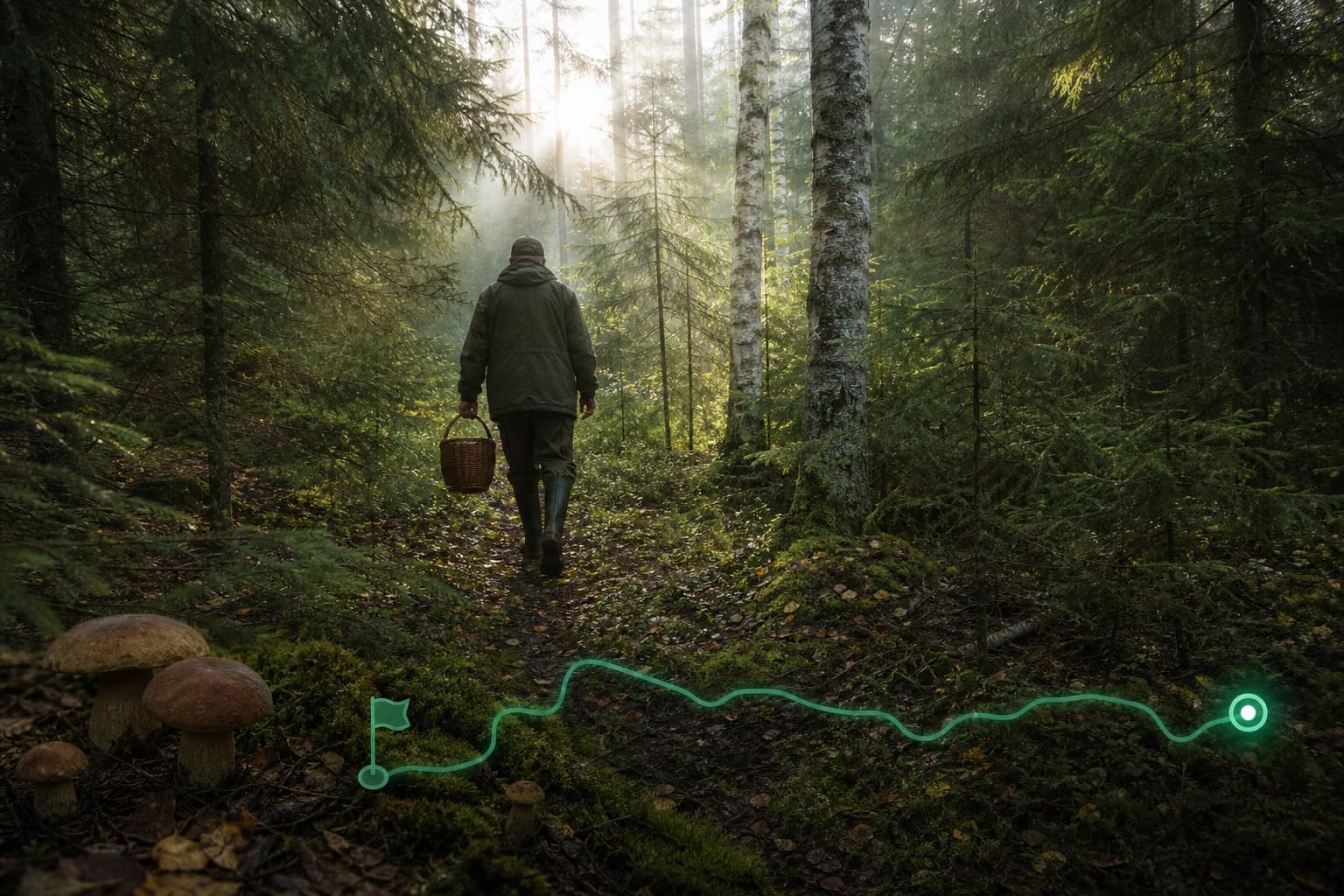
How not to get lost in the forest: the Track feature in SkyForest
Track remembers your forest entry point, draws your path on the map and points the way back — even offline.
7 min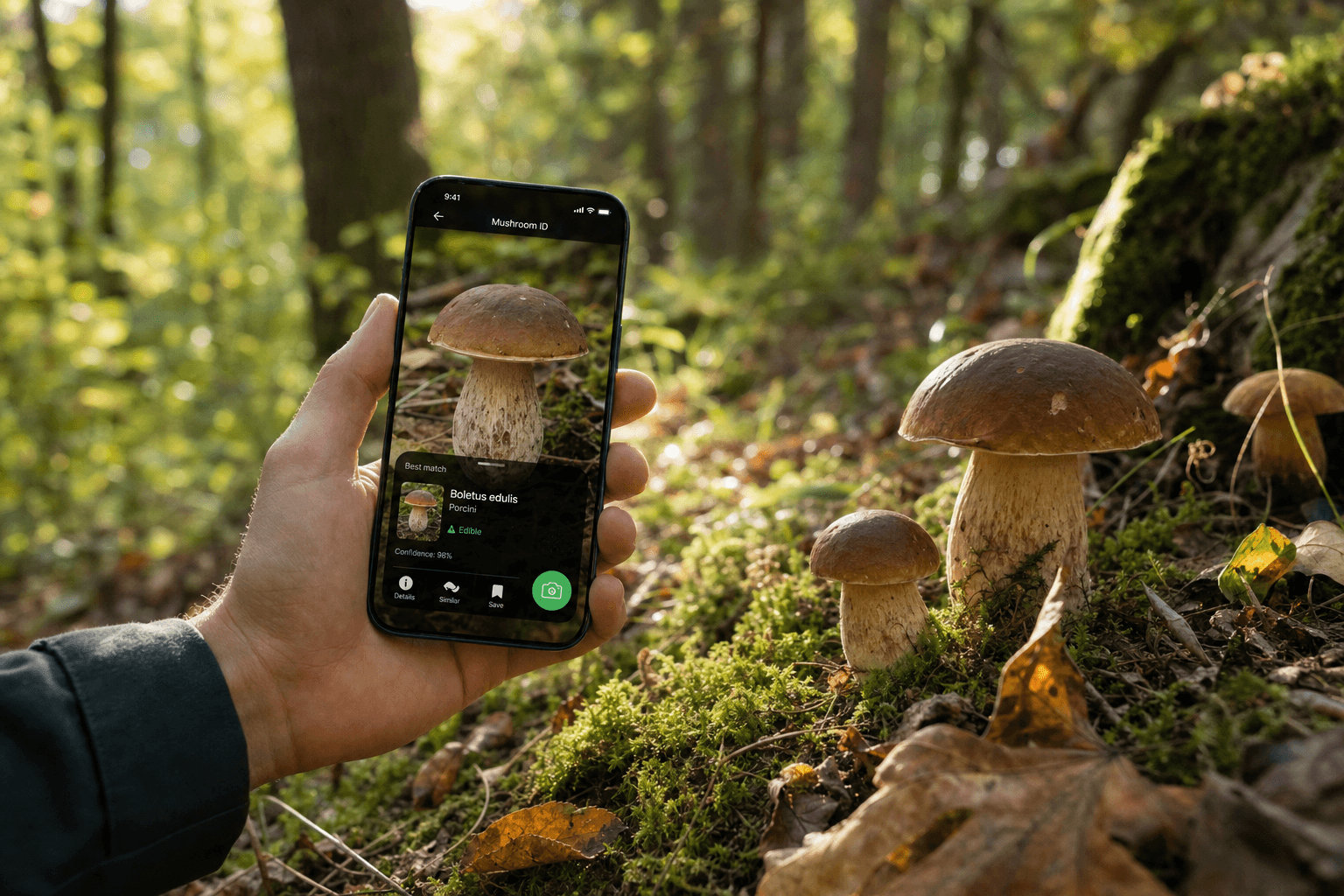
How to identify a mushroom from a photo: apps, neural networks and key features
How accurate identifiers are, what to photograph and which features to check. Plus the SkyForest identifier on Telegram.
11 min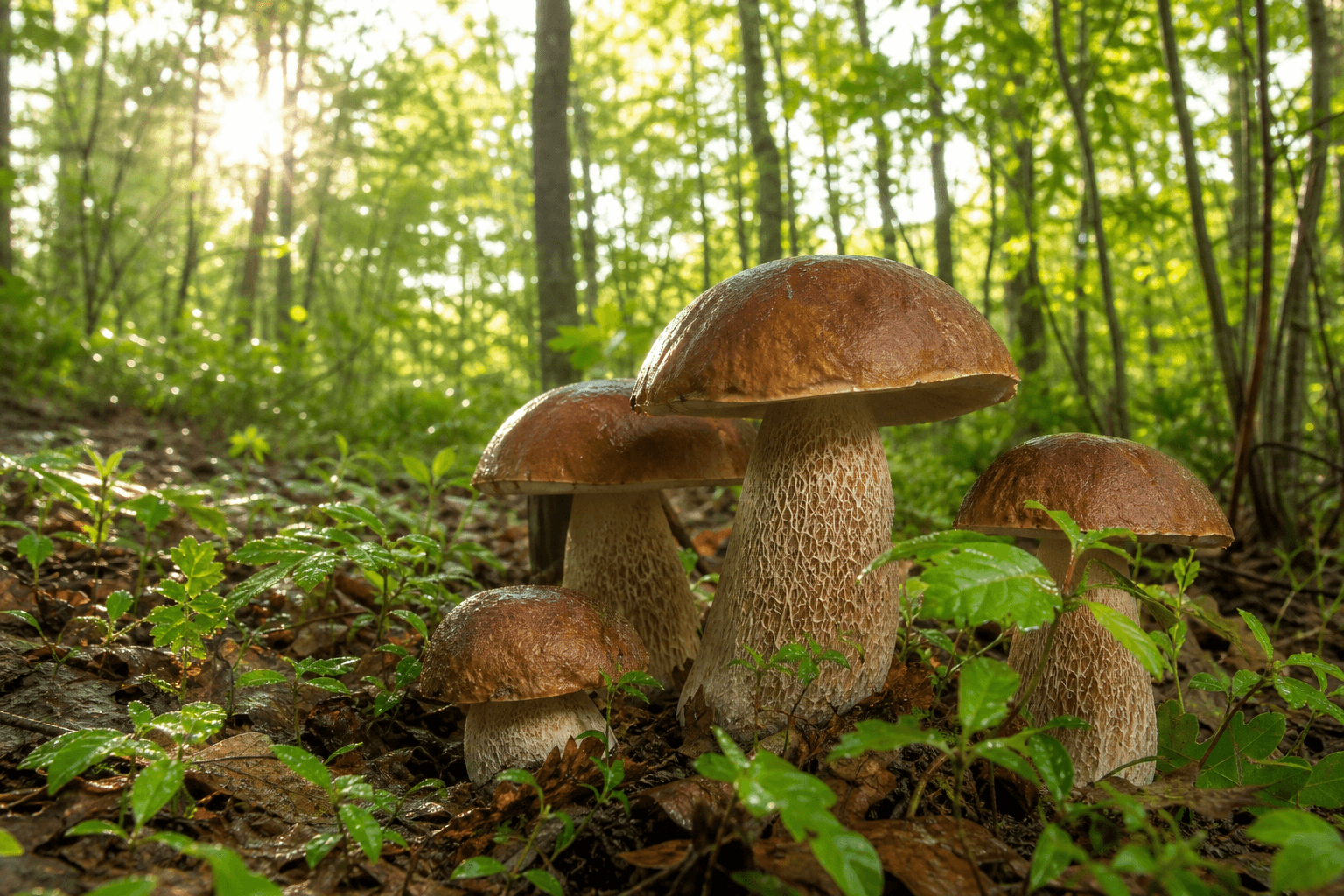
The first May porcini: where and when to find the early cep
The summer cep is the earliest porcini. Timing, locations, weather and how to tell it from look-alikes.
10 min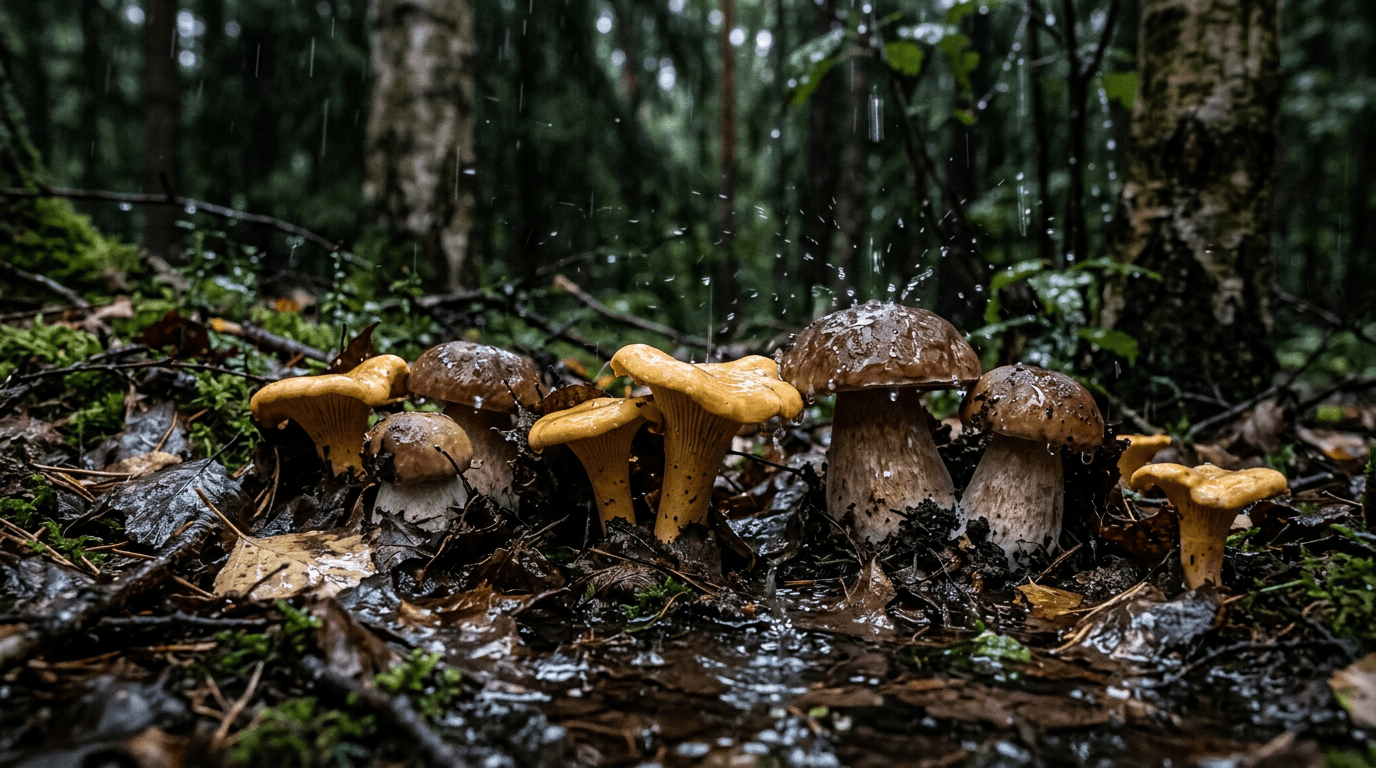
How many days after rain do mushrooms appear
The best windows after rainfall for different species. Ceps, chanterelles and honey mushrooms each have their own timing.
8 min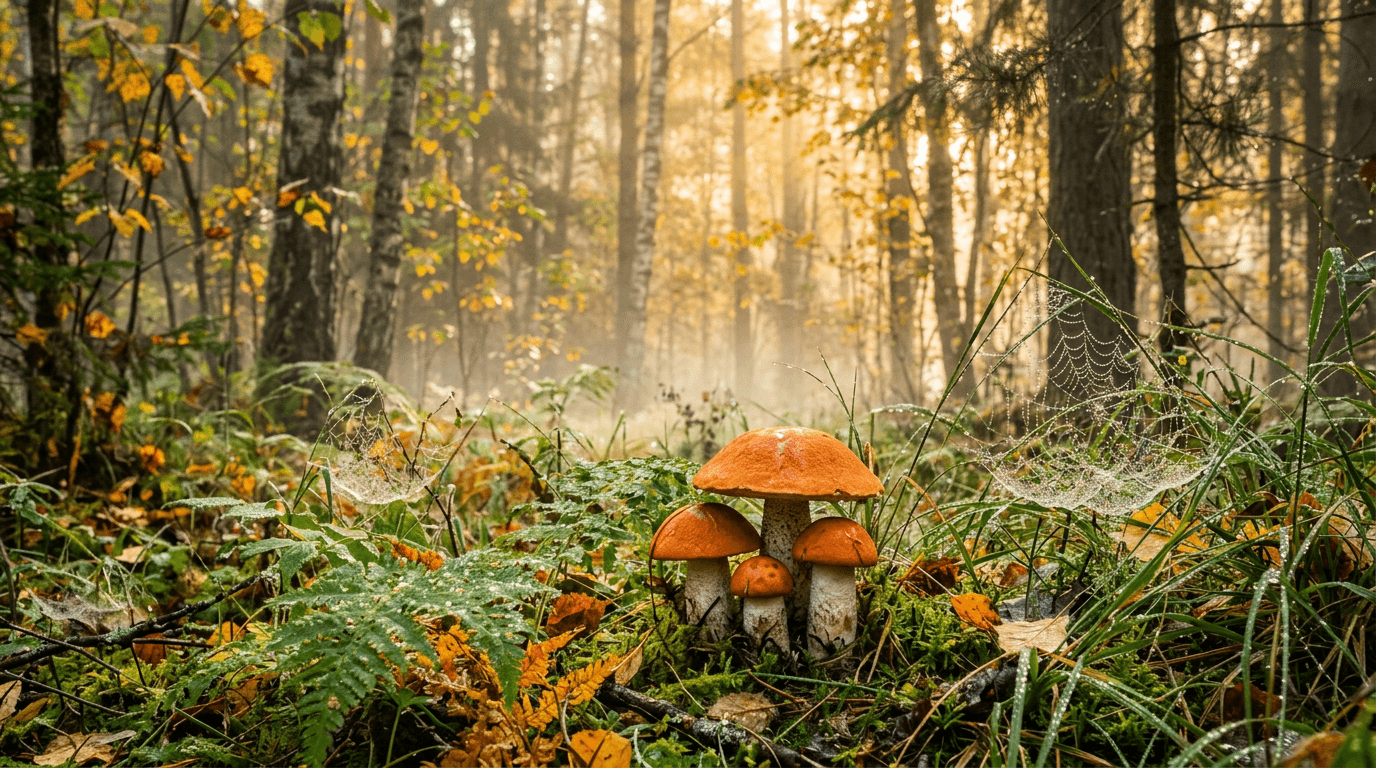
When it's time to head to the forest: 7 signs the mushrooms are up
Practical signs that the season has started. Soil temperature, first finds and other clues.
6 min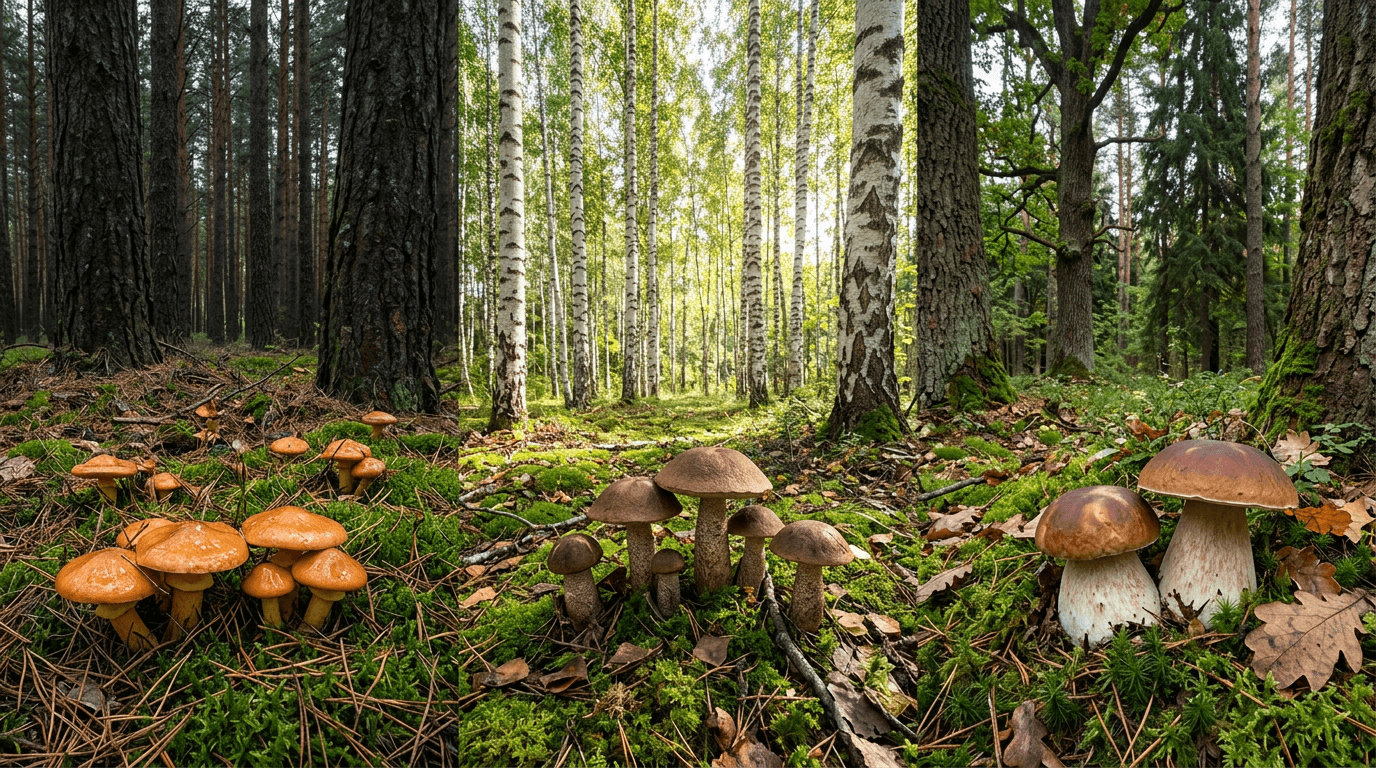
Which forest to search for mushrooms: coniferous, deciduous or mixed
Which mushrooms grow where: ceps in pine forests, birch boletes near birches. A guide to forest types.
10 min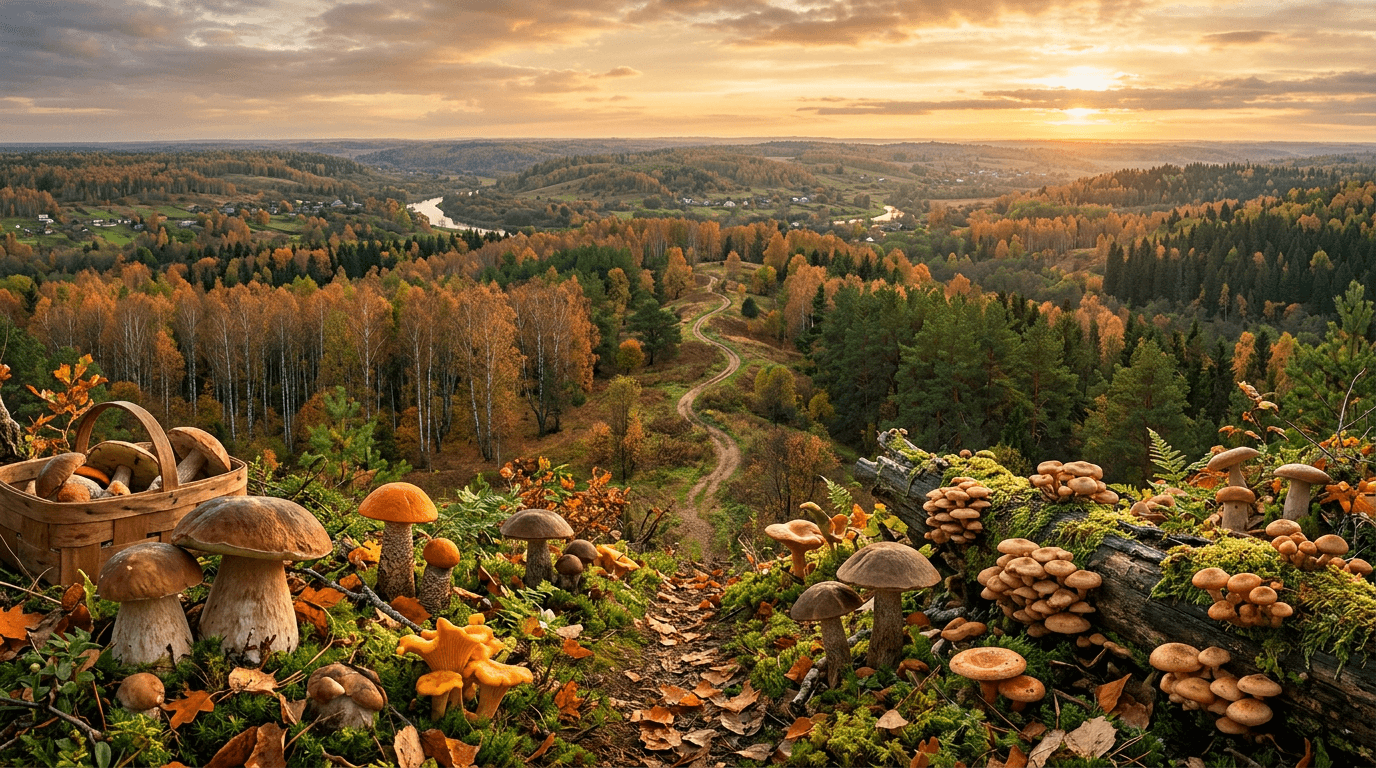
Where mushrooms grow in Russia and Belarus
Regions, forests and specific spots for mushroom foraging. A map of mushroom locations and planning tips.
12 min