
When It’s Time to Head to the Forest: 7 Signs the Mushrooms Are Out
September 10, 2025 · 6 min read
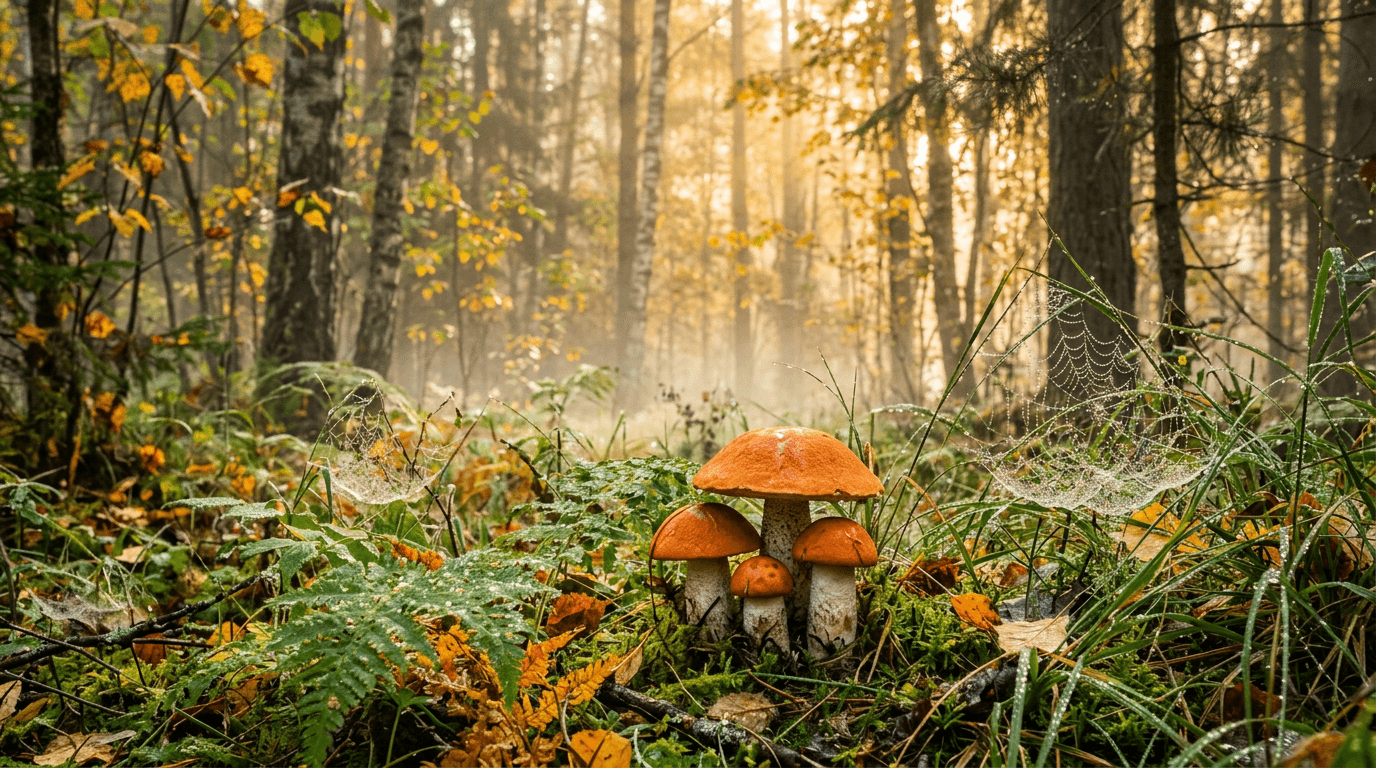
Every forager knows the feeling: summer is past its midpoint, a good rain has come and gone, and one question is already spinning in your head — is it time to head to the forest? Is it too early to go? Have I missed it? Mushroom foraging is a subtle art. Show up a week too early and you’ll come home with an empty basket and disappointment. Be three days late and instead of firm porcini you’ll find nothing but worm-eaten caps.
Over twenty years of mushroom trips I’ve learned to read nature like an open book. The weather, the smells in the forest, the first finds along the edge of the woods — it all comes together into a clear picture. Sometimes it’s enough to glance out the window in the morning and see mist over the field to know: today is a day to drop everything and grab a basket.
In this article you’ll find seven proven signs that tell you the mushroom season has begun and it’s the perfect time to head out foraging. Each sign is backed by scientific data and many years of experience. Together they form a reliable system that rarely leads you astray.
Sign 1: Warm rains fell 5–10 days ago
Rain is the main trigger for the mycelium. But not just any rain — it has to be warm, heavy, and prolonged. A brief downpour during a heat wave only soaks the top layer of soil, while the mycelium needs deep, lasting moisture. The ideal scenario is two or three days of drizzle at an air temperature of +15–20 °C.
Mycologists at the Komarov Botanical Institute have established that the mycelium needs 5 to 12 days after significant soil moisture to form fruiting bodies. The exact timing depends on the species: slippery jacks and russulas are the “sprinters” and need just 3–5 days. Birch and porcini mushrooms put on mass more slowly and appear after 7–12 days. If heat above +28 °C sets in after the rain, moisture evaporates quickly and the window narrows.
A practical rule: note the date of a good rain and count out a week. If there was no scorching heat or overnight frost during that week, you can safely head out on the eighth or ninth day. Experienced foragers keep a rainfall journal — it’s one of the most useful habits for foraging.
Sign 2: Temperatures hold steady at 10–20 °C
The mycelium is a living organism, and it has its own “comfort zone.” A study published in Mycological Progress (2018) showed that the optimal temperature for most edible macrofungi of the temperate zone is +12–18 °C. The soil temperature at a depth of 5–10 cm should be no lower than +8 °C.
Overnight frosts are the forager’s enemy at the start and end of the season. If the temperature drops below zero at night, the mycelium slows its growth, and fruiting bodies that have already emerged may die. But a light morning frost in October is not a death sentence: the mycelium in the soil is protected by a layer of fallen leaves, and when the warmth returns the mushrooms keep growing. Honey fungus and oyster mushrooms, for example, do just fine at +3–8 °C.
In practice, the best mushroom days fall on periods when the average daily temperature stays around +14–17 °C: warm enough for active growth, but not so hot that the soil dries out. In central Russia and Belarus, such conditions usually develop in late July, August, and the first half of September.
Sign 3: High air humidity and morning mist
The old saying “mist in the forest means mushrooms are coming” has a scientific basis. According to the Belarusian ecologist V. V. Shaporov, air humidity above 80% in the surface layer over several days is one of the most reliable predictors of a mass appearance of fruiting bodies. Mist is the visible expression of that humidity.
Mushrooms are 85–95% water, and to form a fruiting body the mycelium needs a constant supply of moisture not only from the soil but also from the air. When thick mist lies over the forest in the morning, evaporation from the soil surface is minimal, and the mycelium gets ideal conditions. That’s why the best mushroom spots are often located in hollows, by streams, and in ravines — places where mist lingers the longest.
If you see mist or heavy dew on the grass three mornings in a row — that’s a strong signal. Check the forecast: humidity above 85% at a temperature of +12–18 °C is almost a guarantee that the mushrooms are out.
Sign 4: Foragers on social media start showing off
It sounds unserious, but it’s one of the fastest and most reliable indicators. Mushroom chats on Telegram, groups on VKontakte, foragers’ forums — as soon as photos of full baskets start appearing in them, it means the mushroom flush has begun. The first reports usually come from the most active and experienced foragers, who “scout” the forest before everyone else.
But be careful: photos from one region don’t mean the mushrooms are out everywhere. Summer storms move in bands — one area may be drenched with rain while the next is passed over. Rely on reports from your own region or from places with similar conditions. Pay attention to the type of forest: if people are showing off porcini from a pine grove but your forest is a birch stand, your mushrooms may appear a couple of days later.
A good approach is to follow 3–4 forager groups from your region and keep an eye on them from mid-June. The first photos of birch boletes and slippery jacks are a signal that the “noble” species will follow within a week.
Sign 5: The first “scouts” appear — russulas and slippery jacks
In mycology there’s a concept of “indicator species” — mushrooms that appear first and signal the start of a flush. Russulas, slippery jacks, and roll-rims are classic scouts. Their mycelium reacts to moisture and warmth faster than the mycelium of porcini or orange-cap boletes.
If you step into the forest and see a scattering of young slippery jacks along the edge or bright russulas along the path — that’s a sure sign. Birch boletes usually appear 3–5 days after the slippery jacks, and a couple of days after that the porcini. Chanterelles occupy an intermediate position: they can appear almost at the same time as the slippery jacks, especially in mixed forests dominated by birch and spruce.
This sign works especially well if you have a trusted mushroom spot near home. Pop in for half an hour and walk along the forest edge. See the scouts — plan a full trip for the weekend. Don’t even see russulas — then it’s early, the soil hasn’t warmed up yet, or there isn’t enough moisture.
Sign 6: The forest smells of mushrooms and decaying leaves
An experienced forager smells mushrooms before seeing them. The characteristic scent — a mix of damp earth, decaying leaves, and a faint mushroom aroma — appears when the mycelium in the leaf litter is actively breaking down organic matter and forming fruiting bodies. This isn’t mysticism but biochemistry: the mycelium releases volatile organic compounds (1-octen-3-ol and others) that we perceive as the “mushroom smell.”
If you walk into the forest and breathe in that very aroma — heavy, earthy, with notes of dampness and decay — it means the mycelium is already at work beneath your feet. The fruiting bodies have either already broken through somewhere under the moss or will appear in the coming days. This smell is especially noticeable early in the morning, when the air is damp and cool.
Seasoned foragers advise: step into the forest, crouch down, and listen to the smells. If it smells only of pine needles and dry earth — it’s early. But if a thick “mushroom spirit” hangs in the air, like a market in season — grab a basket and don’t waste any time.
Sign 7: The weather pattern repeats your best day
This is perhaps the most accurate of all the signs — and the hardest to track by hand. Every forager has “that one day”: when the basket filled up in an hour, the porcini stood in rows, and the orange-cap boletes reddened under every aspen. The question is what the weather was like a week or two before that day.
Mushrooms are the result of the weather conditions not of a single day but of a whole two-week cycle. The amount of rainfall, temperature swings, humidity, wind — all these factors form the “weather fingerprint” that led to the harvest. If the current weather starts to resemble that pattern, the chance of repeating the result is very high.
That’s exactly what SkyForest was built for. You save the date of your best mushroom day — the system remembers the weather from the 14 days before it. Then it compares the current conditions with that benchmark every day. When the match is above 80% — it’s time to head to the forest.
It works because the mycelium in a specific spot reacts to the same weather patterns year after year. Your personal experience, backed by data, becomes the most accurate predictor there is. There’s no need to guess by old folk sayings — it’s enough to compare the numbers.
Month-by-month mushroom calendar
The mushroom season in central Russia and Belarus runs from May to November. Of course, the exact timing shifts depending on the region and the specific year, but the overall picture stays stable. Here is an approximate mushroom season by month:
| Month | Main species | Conditions |
|---|---|---|
| May | Morels, false morels, early slippery jacks | Soil warms to +10 °C, first warm rains |
| June | Birch boletes, slippery jacks, chanterelles (late in the month) | Steady warmth of +15–20 °C, plentiful rain |
| July | Porcini, orange-cap boletes, chanterelles, slippery jacks | Warm downpours, high humidity, frost-free nights |
| August | Porcini, birch boletes, orange-cap boletes, saffron milk caps, milk caps | Peak of the season: warm rains + mist, temperatures of 15–22 °C |
| September | Honey fungus, saffron milk caps, milk caps, porcini (second wave) | Temperatures drop to 10–15 °C, morning dew and mist |
| October | Autumn honey fungus, tricholoma, man on horseback, oyster mushrooms | Cool (+5–12 °C), frequent rain, first frosts |
| November | Oyster mushrooms, winter enoki, wood blewit | Cold, but without lasting snow; mushrooms until the first hard frosts |
Remember: the calendar is a guide, not a schedule. Every year is unique. The spring of 2024 was late, and porcini around Moscow came out only by mid-July. But in 2023 the first porcini were found as early as the end of June. That’s exactly why observing the actual weather conditions matters more than any calendar.
Frequently asked questions
How many days after rain do mushrooms appear?
Most species appear 5–10 days after a heavy, warm rain. Slippery jacks and russulas react the fastest — they need just 3–5 days. Porcini and orange-cap boletes are more leisurely: they usually take 7–12 days. It's important that heat above +28 °C doesn't set in after the rain — otherwise the moisture evaporates quickly and the mycelium doesn't have time to form fruiting bodies.
Can you pick mushrooms after frost?
A light frost (down to −2 °C) doesn't kill the mycelium — it sits in the soil, protected by a layer of leaf litter. Fruiting bodies that have already grown may look fine, but they quickly turn mushy once they thaw. Honey fungus and oyster mushrooms tolerate frost better than most and keep growing at +3–5 °C. Porcini, birch boletes, and slippery jacks, on the other hand, don't like frost — their season usually ends with the first lasting subzero temperatures.
When does mushroom season start in Belarus?
The first mushrooms (morels and false morels) appear as early as late April to early May. The main season for the prized "noble" mushrooms kicks off in late June to early July with the first birch boletes and slippery jacks. The peak of foraging falls in August and September: during this time you can find practically every species in the forest. The season continues until the end of October, and oyster mushrooms and winter enoki are picked right up until the hard frosts of November.
What temperature is best for mushroom growth?
The optimal range for most edible mushrooms is +10 to +20 °C. What matters is not only the air temperature but also the soil temperature at a depth of 5–10 cm: it should be above +8 °C. That's exactly why mushrooms grow more slowly after a cold night, even if the day is warm. Mycologists note that porcini grow most actively at an average daily temperature of +14–17 °C combined with high soil moisture.
How does SkyForest help you find the best time to pick mushrooms?
SkyForest remembers the weather from the 14 days leading up to your successful mushroom trip and builds a "weather fingerprint." Then the service compares the current conditions with this benchmark every day and gives you a match percentage. When the percentage climbs above 80%, it means the weather right now is the same as it was before your best day. This is the most reliable way not to miss a mushroom flush, because it's based on your personal experience rather than general forecasts.
In summary
The seven signs aren’t a guarantee but a system of reference points. The more of them line up at once, the higher the chance that the forest will reward you. A warm rain a week ago, misty mornings, steady +15 °C, scout slippery jacks along the forest edge, and a mushroom aroma in the air — if all of that comes together, drop everything and go.
And if you’d like to take the guesswork out of the equation — give SkyForest a try. Record your best mushroom day, turn on monitoring, and the service will tell you when the conditions repeat. Foraging becomes even more rewarding when an algorithm does the counting for you.
Don’t miss your mushroom day
SkyForest compares the current weather with your best mushroom day and tells you when it’s time to head to the forest. Signing up is free.
Try it for free →Read also
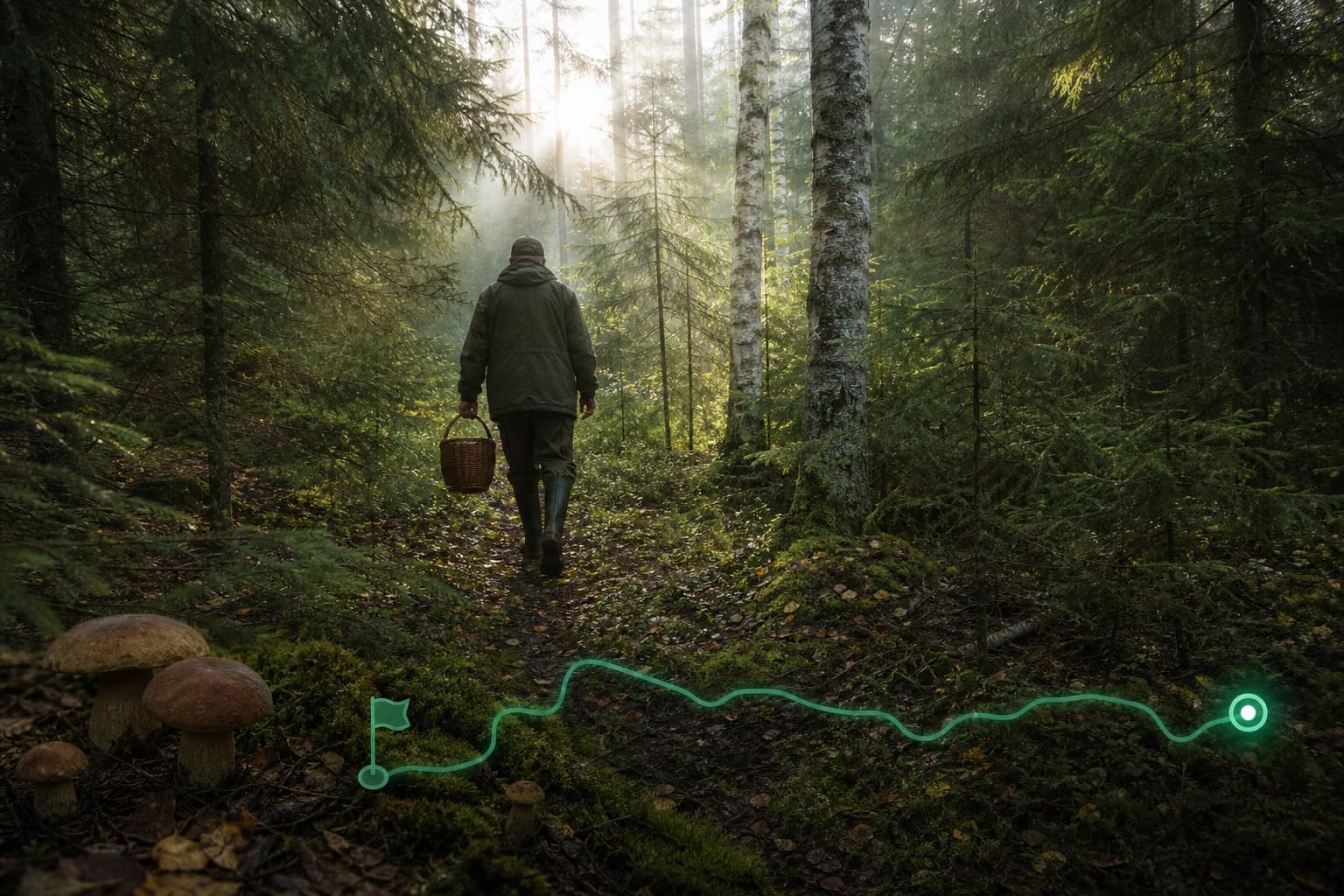
How not to get lost in the forest: the Track feature in SkyForest
Track remembers your forest entry point, draws your path on the map and points the way back — even offline.
7 min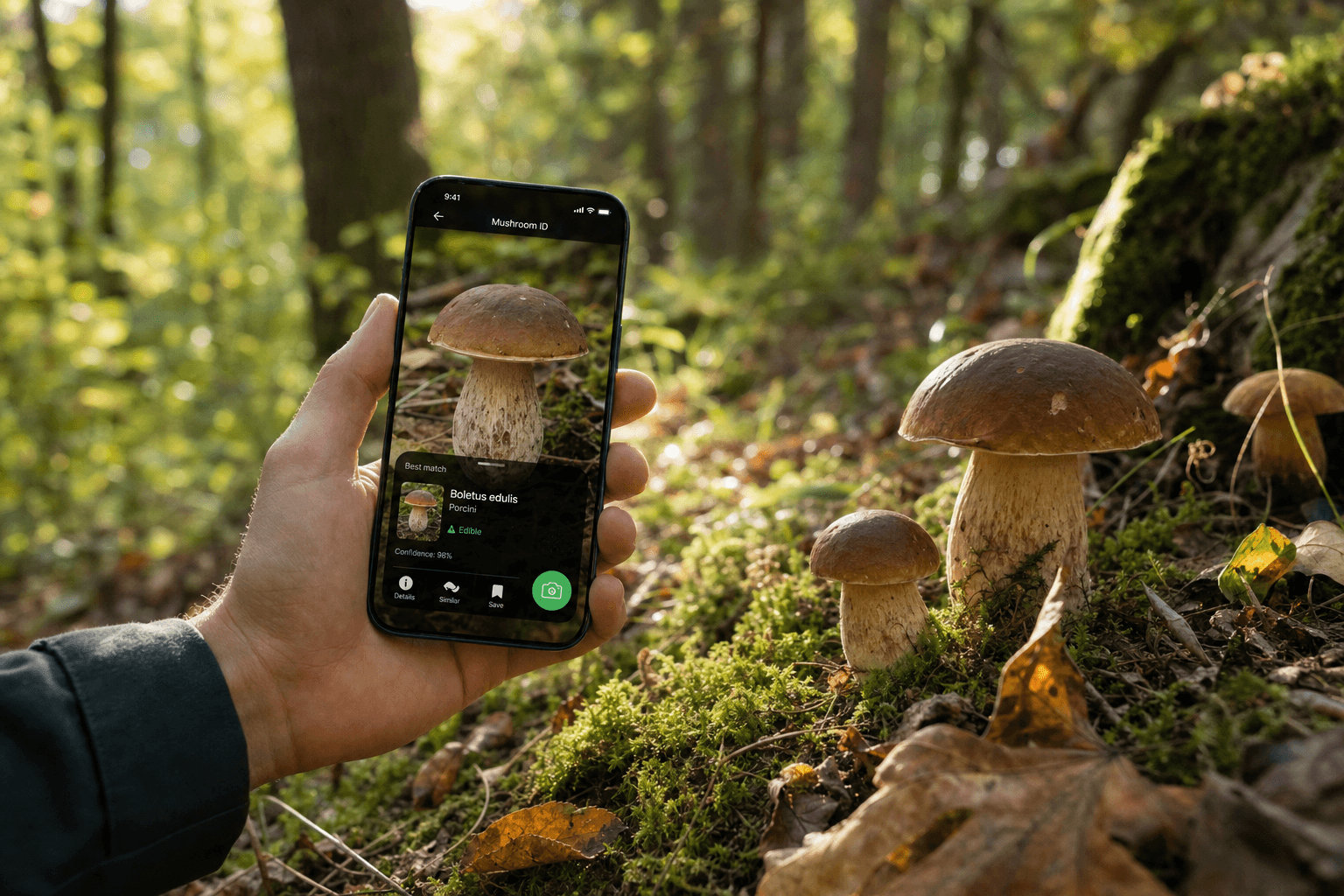
How to identify a mushroom from a photo: apps, neural networks and key features
How accurate identifiers are, what to photograph and which features to check. Plus the SkyForest identifier on Telegram.
11 min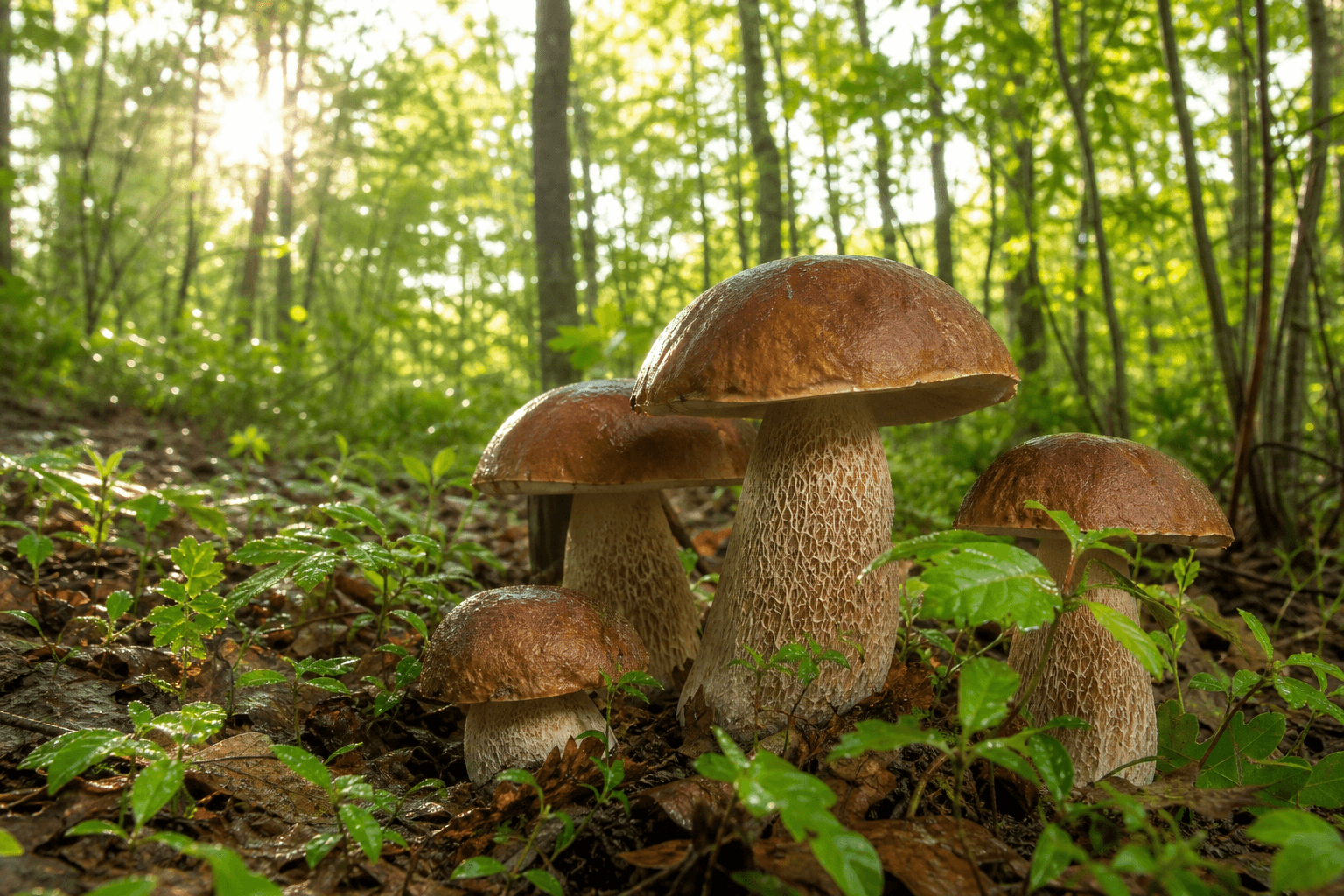
The first May porcini: where and when to find the early cep
The summer cep is the earliest porcini. Timing, locations, weather and how to tell it from look-alikes.
10 min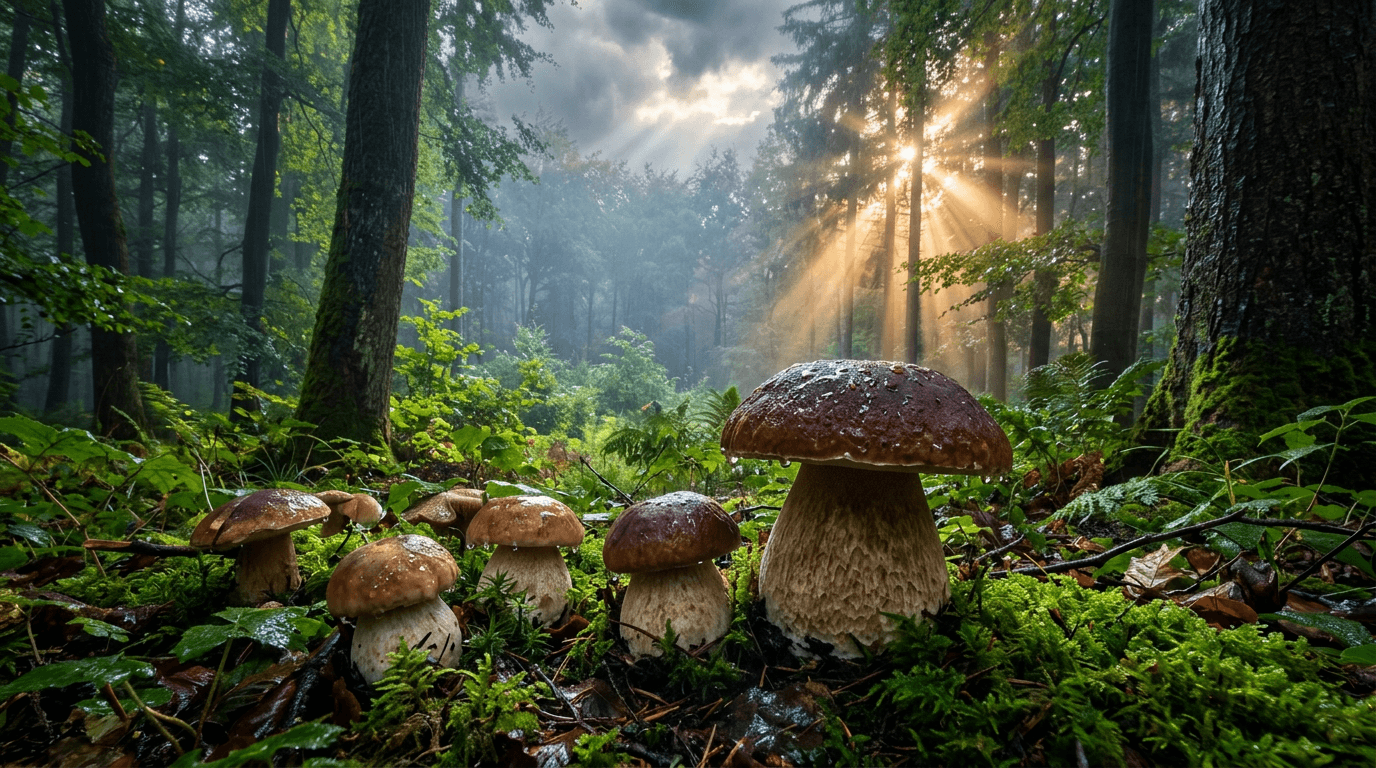
Weather for mushrooms: at what temperature and humidity mushrooms grow
Which weather conditions are ideal for mushroom growth. Temperature, humidity and rainfall — what matters most.
12 min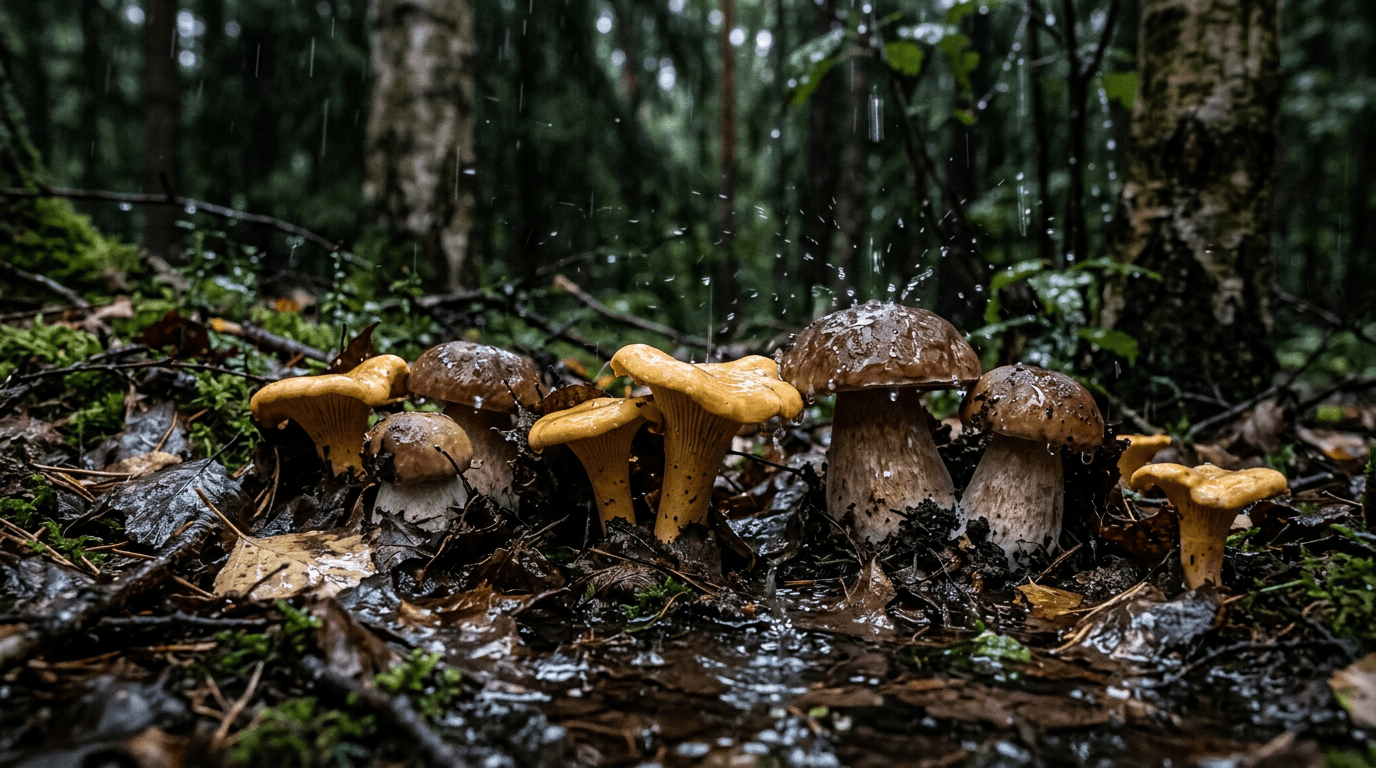
How many days after rain do mushrooms appear
The best windows after rainfall for different species. Ceps, chanterelles and honey mushrooms each have their own timing.
8 min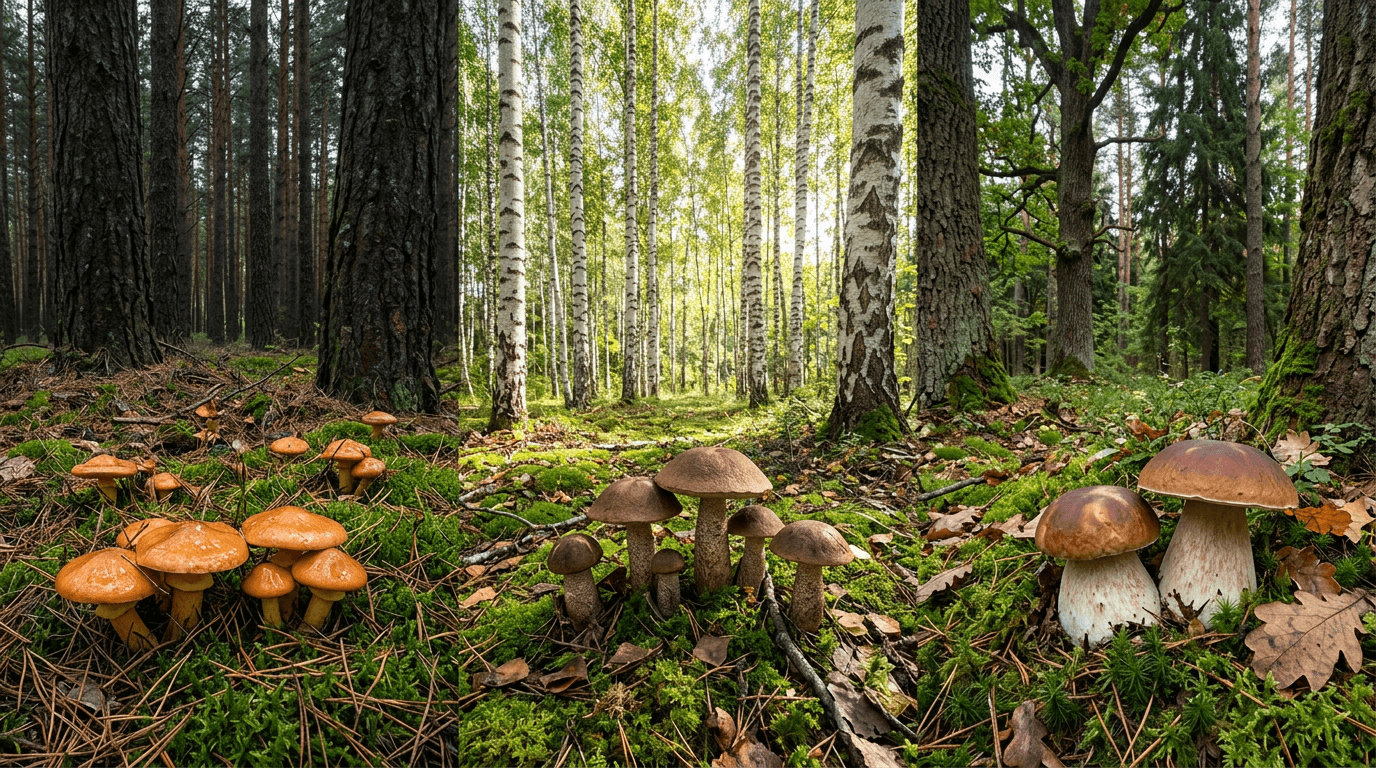
Which forest to search for mushrooms: coniferous, deciduous or mixed
Which mushrooms grow where: ceps in pine forests, birch boletes near birches. A guide to forest types.
10 min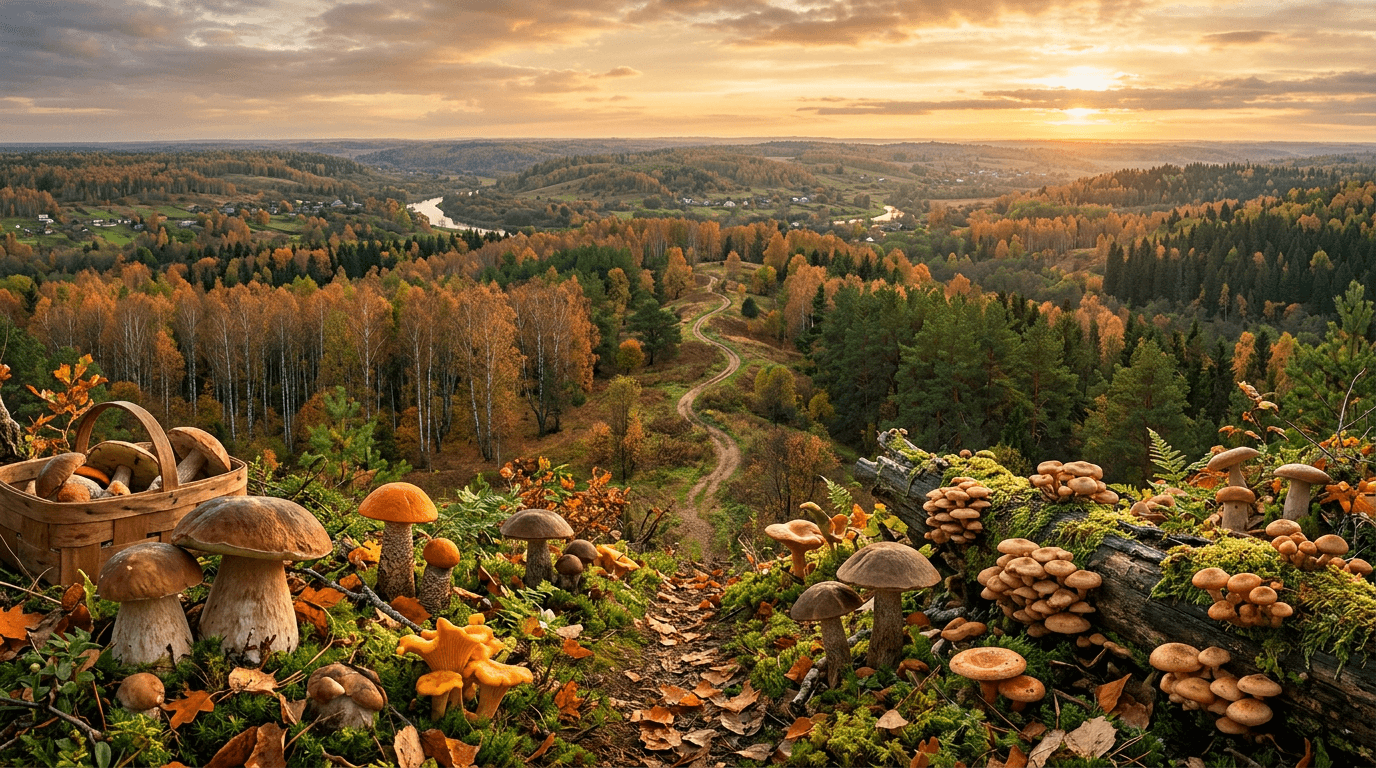
Where mushrooms grow in Russia and Belarus
Regions, forests and specific spots for mushroom foraging. A map of mushroom locations and planning tips.
12 min