
The first May porcini: where and when to find the early cep
Updated: June 15, 2026 · Reading time: 10 min
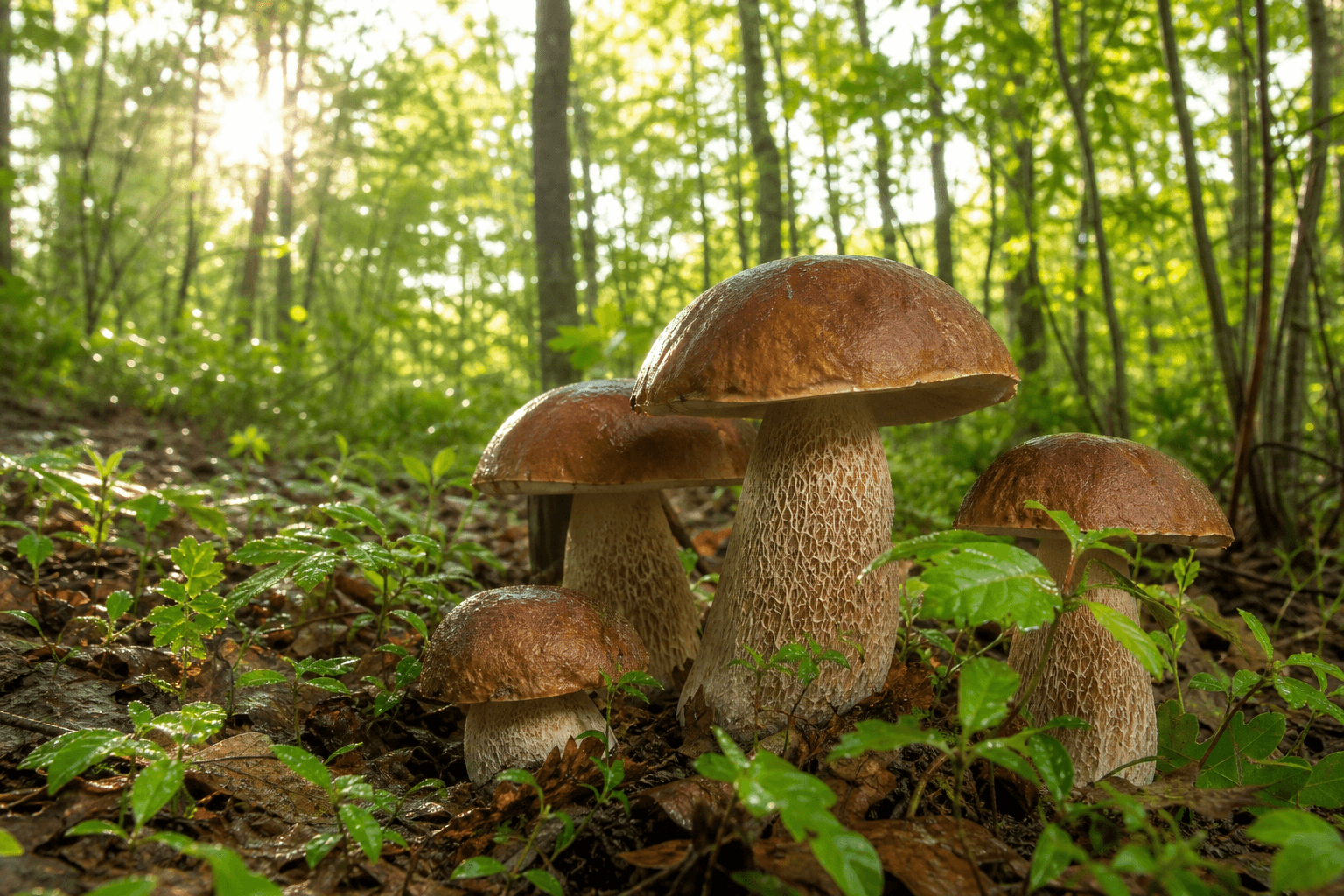
For most foragers the porcini is a symbol of autumn. But experienced cep hunters know a secret: the first porcini can be gathered as early as May, when the forest has only just put on fresh foliage and the classic season is still months away. These early sturdy mushrooms are a species of their own, and hunting them has its own rules.
We are talking about the summer cep (also known as the oak cep, Boletus reticulatus) — the earliest of all porcini. Let’s look at when it appears, which forests to search, what weather triggers its growth and how not to confuse your find with inedible look-alikes.
What the May cep is
The May cep is the common name for the summer cep (Boletus reticulatus, synonyms — the oak cep, the netted cep, Boletus aestivalis). It belongs to the same Boletus genus as the classic porcini (Boletus edulis) and is considered one of the finest in flavor. Its main feature is the earliest fruiting period among all the boletes.
Its “calling card” helps you recognize it — a pronounced pale net covering almost the entire stem (on the ordinary porcini it appears only near the top). The cap is brownish, more often matte and velvety, and in dry weather frequently becomes covered with fine cracks — like parched earth. The flesh is white, does not change color when cut, and has a pleasant nutty smell.
When they appear: timing and signals
The summer cep starts in mid to late May, and in warm southern regions it is found as early as the beginning of the month. It is the earliest porcini — it beats the classic summer-autumn flushes by several weeks. Over the season, which lasts until October, several “waves” (generations) manage to succeed one another in the same spot.
The main signal is steady warmth. The cep needs warmed soil and warm nights. As soon as the May days are consistently warm and recent rain has soaked the ground with moisture — it’s time to plan a first outing. Remember the rule of early ceps: warmth + moisture after rain, not just one of the two on its own.
Where to look for May porcini
The summer cep forms mycorrhiza mainly with trees of the beech family, so you should look for it in bright deciduous forests:
- Oak groves — the main address. It’s no accident the mushroom is called the oak cep.
- Forests with beech, hornbeam, lime, and in the south — near the edible chestnut.
- Edges, rides, clearings — areas well warmed by the sun, not the deep thicket.
- Hilly terrain and dryish, rather alkaline soils.
The logic is simple: in May the soil in deep shade and hollows is still cold and damp. But the open, sun-warmed edges of the forest — where the ground is already warm — become the first points of growth. The species is widely distributed: from Belarus and central Russia to Crimea, the Caucasus and the Krasnodar region, across all of temperate Eurasia.
What weather triggers growth
The ideal scenario for the May cep is prolonged warm rain, after which humid weather with morning mists sets in. Short thunderstorms followed by “greenhouse” humidity work well too. You shouldn’t set out into the forest on the day of the rain, but a few days later — when the mycelium has received the signal and had time to form fruiting bodies.
In drought, looking for early ceps is almost pointless: without moisture the mycelium does not start to grow, and the mushrooms that have already grown quickly wilt and crack. That is exactly why early foraging is largely a game with the weather: you have to catch the window of warmth and moisture.
SkyForest tip: mark your oak groves and edges on the map, and the service will track rainfall and temperature at those points — and let you know when, after the May rains, ideal conditions form for the first ceps. Read more about weather conditions in the article “Weather for mushrooms”.
How to tell it from look-alikes
The good news: the cep has no deadly poisonous look-alikes. But there are inedible and bitter species that can ruin a whole dish. Check three features:
| Feature | Summer cep | Bitter bolete |
|---|---|---|
| Tube layer | White, then yellowish | Turns pink |
| Net on the stem | Pale, over the whole stem | Dark, coarse |
| Flesh when cut | White, unchanging | Turns slightly pink |
| Taste | Pleasant, nutty | Very bitter |
Less common is the devil’s bolete — it has reddish pores and flesh that reddens or turns blue. A true cep keeps its flesh white. If you are unsure about a find, photograph it and check it with the mushroom identifier — but always make the final decision based on the combination of features.
Tips for early foraging
- Walk along warmed edges and rides, not deep into the damp forest.
- The cep loves consistency: remember your good spots — it returns to them year after year.
- Cut the mushroom or gently twist it out without damaging the mycelium.
- Early ceps are more prone to worms in the warmth — check the cut right away.
- Catch the window after rain: 3–6 warm, humid days is the best time.
In summary
The May cep is a pleasant bonus for those who don’t want to wait for autumn. Look for the summer cep from mid-May in bright oak groves and on warmed edges, after warm rain. It’s easy to identify by the net over the whole stem and the white flesh that neither turns blue nor bitter. And to avoid missing the perfect weather window, let SkyForest watch the rainfall and temperature for you — and head into the forest when your chances of a basket of the first porcini are at their highest.
Frequently asked questions
In which month do the first ceps appear?
The earliest porcini — the summer cep (also known as the oak cep, Boletus reticulatus) — appears as early as mid to late May, and in warm southern regions sometimes in early May. It is the earliest of all the boletes. It fruits in waves right through to October.
Where should I look for May porcini?
In bright deciduous forests, above all in oak groves, but also near beech, hornbeam, lime and chestnut. The mushroom likes well-warmed forest edges, rides and clearings, hilly terrain and dryish alkaline soils. In deep shade and damp hollows it is almost absent in May.
What weather do May porcini need?
Warm and humid: the best pickings come a few days after prolonged rain or short thunderstorms, when the soil has warmed up and the air stays humid (morning mists). The cep needs warmth — steady daytime temperatures and warm soil. In drought, early ceps barely grow.
How does the May cep differ from the ordinary porcini?
It is a close relative of the common porcini. The main difference is the pronounced pale net covering almost the entire stem (on the ordinary porcini the net is only near the top). The cap is often more matte, brownish, and frequently cracks in dry weather. When cut, the flesh stays white and does not turn blue.
Which dangerous mushrooms can the cep be confused with?
The main look-alikes are the bitter bolete (Tylopilus felleus), whose tube layer turns pink and which has a very bitter taste, and the rarer devil's bolete with reddening flesh and reddish pores. A true cep has white flesh that does not turn blue and is not bitter. If in any doubt, it is better not to pick the mushroom.
Read also
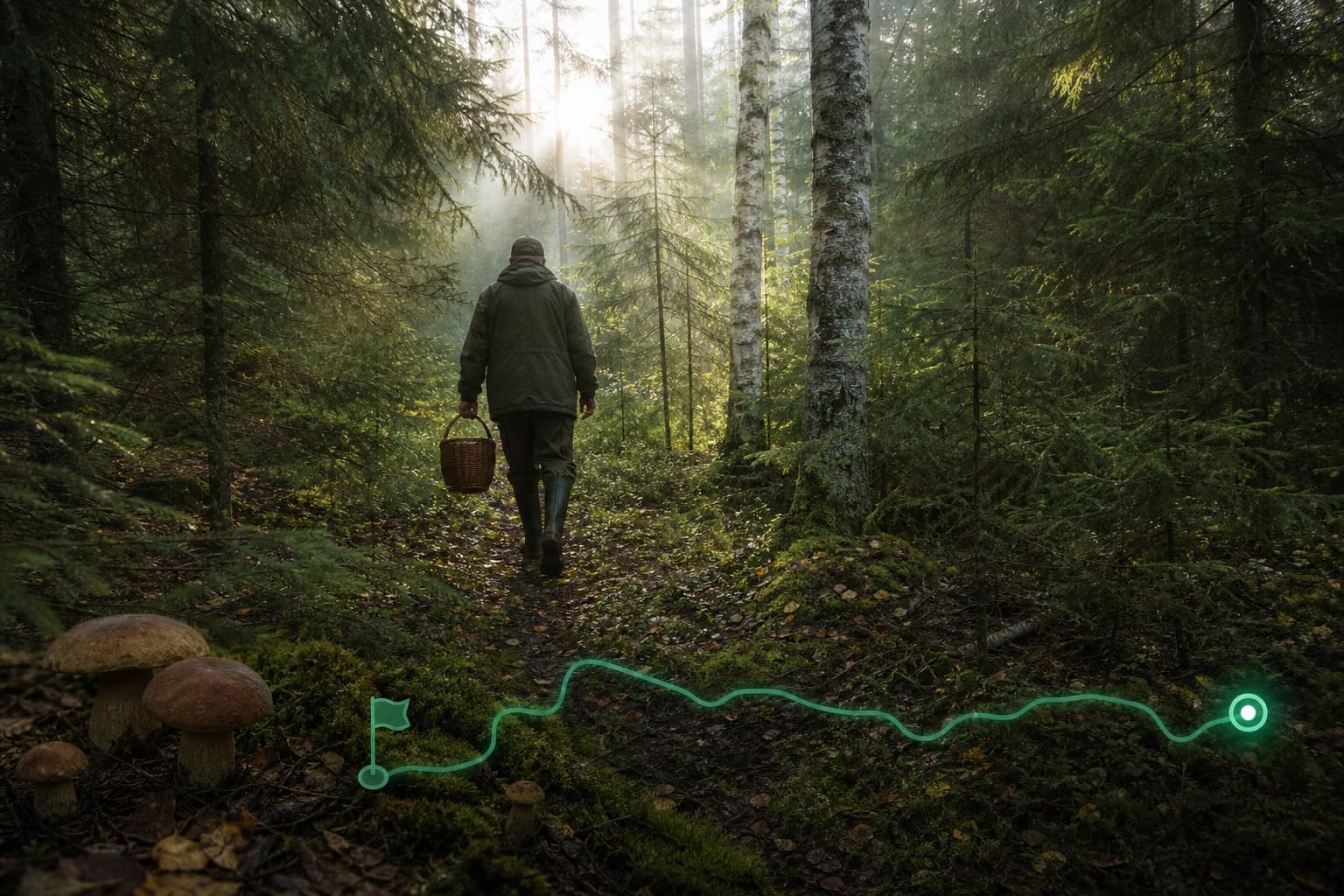
How not to get lost in the forest: the Track feature in SkyForest
Track remembers your forest entry point, draws your path on the map and points the way back — even offline.
7 min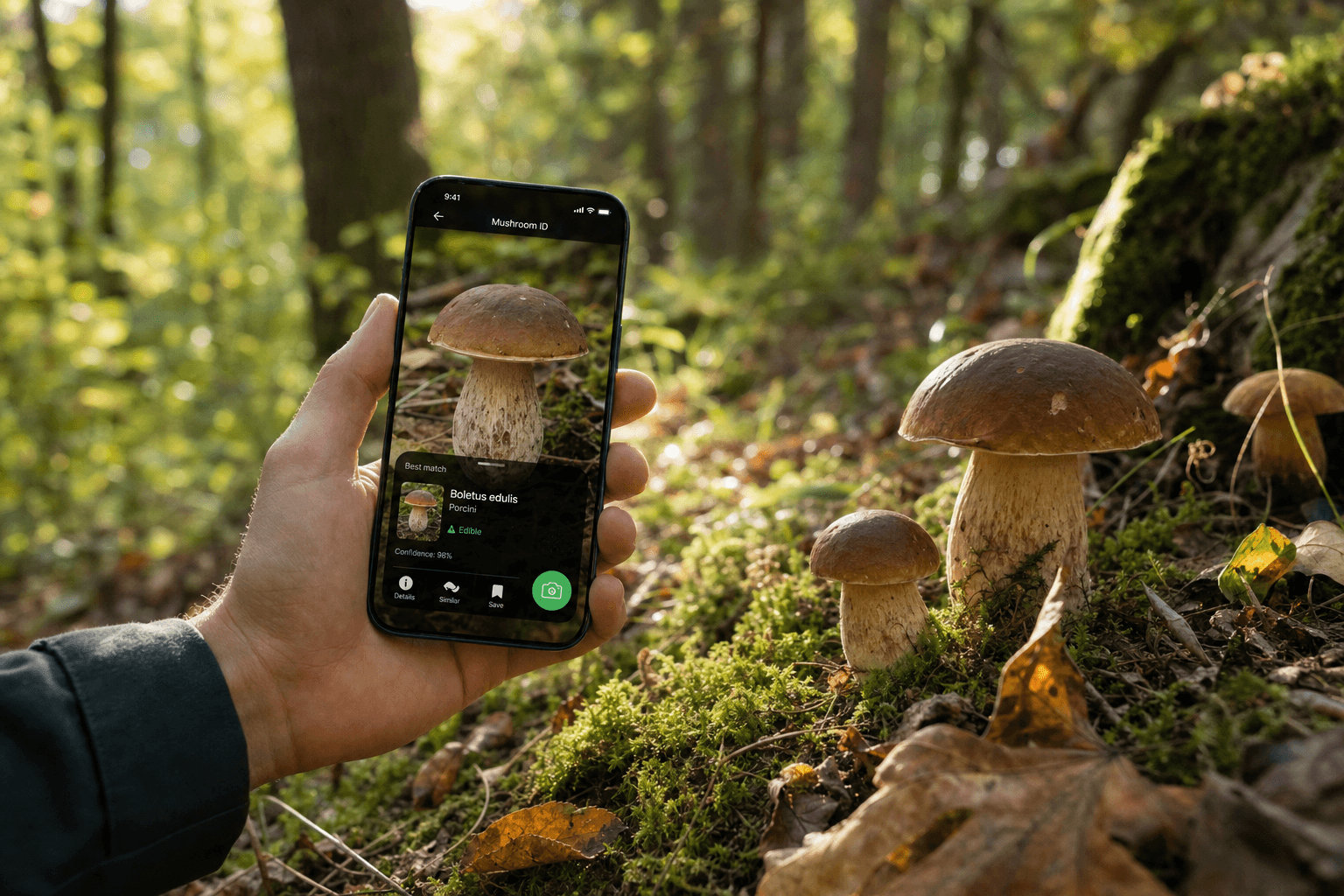
How to identify a mushroom from a photo: apps, neural networks and key features
How accurate identifiers are, what to photograph and which features to check. Plus the SkyForest identifier on Telegram.
11 min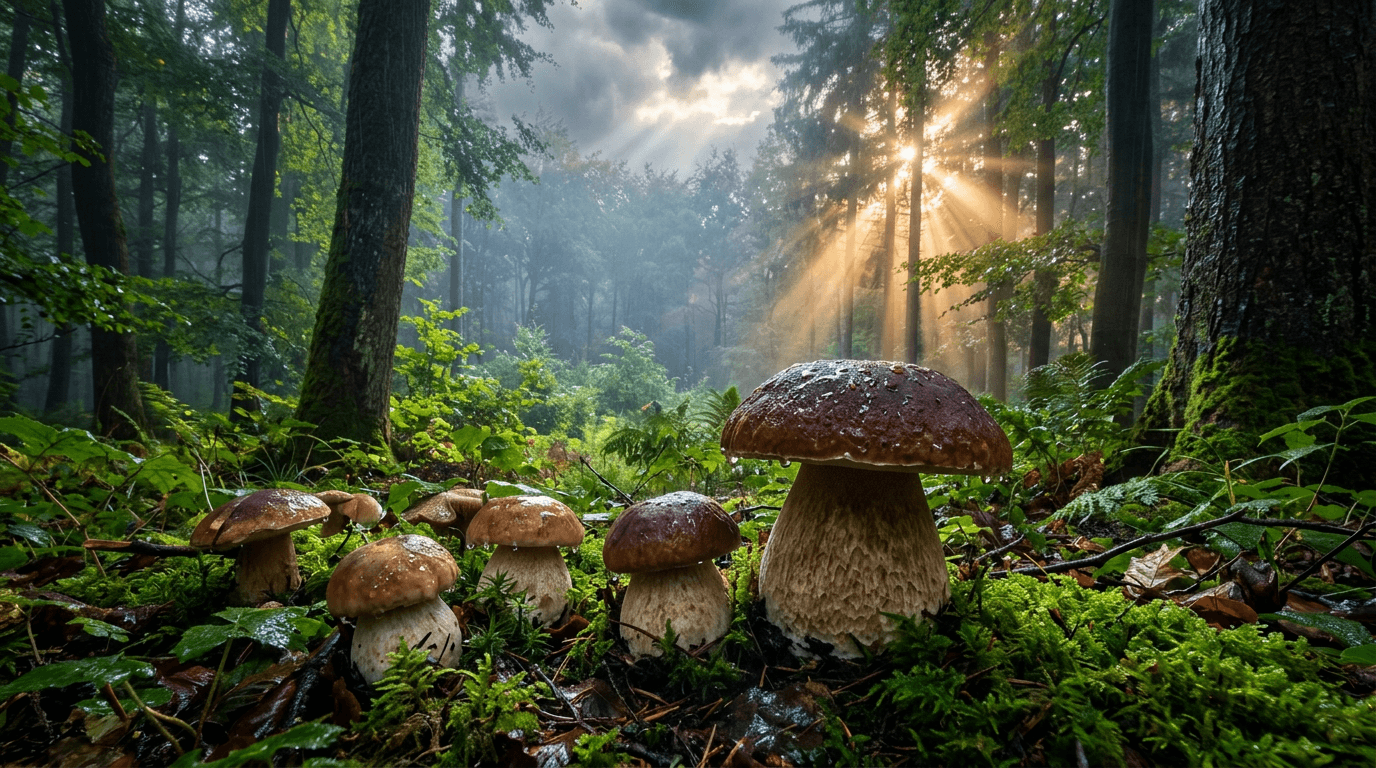
Weather for mushrooms: at what temperature and humidity mushrooms grow
Which weather conditions are ideal for mushroom growth. Temperature, humidity and rainfall — what matters most.
12 min
How many days after rain do mushrooms appear
The best windows after rainfall for different species. Ceps, chanterelles and honey mushrooms each have their own timing.
8 min
When it's time to head to the forest: 7 signs the mushrooms are up
Practical signs that the season has started. Soil temperature, first finds and other clues.
6 min
Which forest to search for mushrooms: coniferous, deciduous or mixed
Which mushrooms grow where: ceps in pine forests, birch boletes near birches. A guide to forest types.
10 min
Where mushrooms grow in Russia and Belarus
Regions, forests and specific spots for mushroom foraging. A map of mushroom locations and planning tips.
12 minDon’t miss the first wave of porcini
SkyForest analyzes the weather at your mushroom spots and suggests the best day to go foraging. Registration is free.
Try SkyForest